
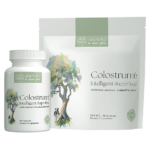






Most functional foods are defined by a single prominent compound, the antioxidant in a berry, the polyphenol in a plant extract, the fatty acid in a seed oil. Colostrum does not fit that model. It contains not one defining compound but dozens of biologically active molecules, each with a distinct function, and all operating in coordination with one another. This is one reason scientists often describe bovine colostrum as one of the most biologically complex functional foods found in nature.
Understanding what is inside colostrum, not just the names of its components but what those components do and why they matter, is the foundation of understanding why this substance has attracted sustained scientific interest.
Immunoglobulins: The Body’s Antibody Architecture
The most extensively studied components of colostrum are its immunoglobulins. Immunoglobulins are proteins that function as antibodies within the immune system. They participate in the recognition and response to foreign substances that the immune system needs to evaluate.
Colostrum contains several immunoglobulin classes, with IgG (Immunoglobulin G) being the most abundant in bovine colostrum. IgG is also the predominant immunoglobulin class in the human bloodstream, which researchers believe is one reason bovine colostrum-derived immunoglobulins may interact with the human digestive and immune systems in meaningful ways.
These molecules help support the body’s natural immune recognition systems. In early life, they provide an incoming immune architecture to newborns whose own immune development is still incomplete. Researchers continue to study how immunoglobulin-rich sources may interact with the immune tissues of adult mammals.
Lactoferrin: More Than an Iron-Binding Protein
Lactoferrin is one of the more multifunctional proteins found in colostrum. It was originally identified as an iron-binding protein, a molecule capable of sequestering iron in ways that may support microbial balance within the body’s ecosystems. But lactoferrin’s functions extend well beyond iron metabolism.
Researchers have studied lactoferrin in the context of antimicrobial activity, immune modulation, and digestive health. It is believed to interact with microbial populations within the gut in ways that support the balance of the digestive environment. It has also attracted attention in healthy aging research for its involvement in cellular signaling processes.
Bovine lactoferrin shares considerable structural similarity with human lactoferrin, another example of the cross-species compatibility that makes bovine colostrum a scientifically relevant source for human nutrition research.
Proline-Rich Polypeptides: Immune Signaling Molecules
Colostrum also contains a class of compounds known as proline-rich polypeptides (PRPs). These short-chain proteins are believed to participate in the signaling processes that help regulate normal immune response activity.
Researchers describe PRPs as biological messengers, compounds that help communicate regulatory signals within the immune system. Their presence in colostrum, alongside immunoglobulins and lactoferrin, contributes to the coordinated nature of colostrum’s immune-related compounds.
Growth Factors: Beyond Immune Function
In addition to its immune-related compounds, colostrum contains a spectrum of naturally occurring growth factors. These include:
- Insulin-like Growth Factor 1 (IGF-1)
- Insulin-like Growth Factor 2 (IGF-2)
- Transforming Growth Factor alpha and beta (TGF-alpha, TGF-beta)
- Epidermal Growth Factor (EGF)
- Platelet-Derived Growth Factor (PDGF)
Growth factors are specialized proteins that function as biological messengers regulating communication between cells. In colostrum’s context, they support cellular development, tissue integrity, and the normal processes of growth and repair. Their presence alongside immune factors is not coincidental, it reflects the biological reality that early development requires both immune support and tissue growth simultaneously.
Why These Compounds Work Together
Perhaps the most important thing to understand about colostrum’s components is that they do not function in isolation. A supplement containing only IgG is not the same as a whole-colostrum product, in the same way that an isolated vitamin is not equivalent to the food it came from. The compounds in colostrum exist in a biological matrix, proportions, cofactors, and structural relationships that have evolved together over millions of years.
This is why scientists often describe colostrum not as a single nutrient but as a biological network of supportive compounds. Reducing colostrum to any one of its parts misses what makes it scientifically interesting.
An Ongoing Area of Research
As nutritional science continues to evolve, colostrum remains an active area of research in immunology, sports nutrition, digestive health, and healthy aging. The depth of its composition continues to reveal new layers of complexity with each generation of analytical technology.
For those interested in how these immune and growth factors interact with cellular repair and recovery processes, our post on growth factors and the science of cellular repair provides a closer look at that dimension of colostrum’s biology.