
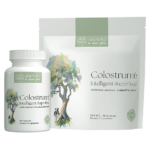




When a mammal is born, it arrives in a world full of biological challenges its immune system has not yet fully prepared for. Nature’s answer to this vulnerability is not a pharmaceutical intervention or a synthetic supplement. It is a substance produced for only a narrow window of time, delivered at precisely the right moment, a fluid scientists have studied for decades and are still working to fully understand. That substance is colostrum.
What Is Colostrum, Exactly?
Colostrum is the first fluid produced by the mammary gland following birth. It is not conventional milk. In composition, structure, and biological function, it is a distinct substance, one that appears briefly, delivers an extraordinary concentration of biologically active compounds, and then transitions into something else entirely.
For millions of years, mammals have relied on colostrum to help newborns make the transition from the protected environment of the womb to the complex and often challenging external world. What makes colostrum so remarkable from a scientific standpoint is not a single compound or a single function, it is the breadth and coordination of everything it contains.
Researchers have identified dozens of biologically active compounds within colostrum, including immunoglobulins (the proteins that function as antibodies), lactoferrin (a multifunctional protein involved in iron binding and believed to play a role in supporting microbial balance), proline-rich polypeptides (compounds researchers believe may help support normal immune signaling), and naturally occurring growth factors including IGF-1, IGF-2, Epidermal Growth Factor, and Transforming Growth Factors.
Each of these compounds plays a role in cellular communication and biological development. Together, they form what scientists often describe as a coordinated biological system, not simply a collection of isolated nutrients.
What Makes Bovine Colostrum Relevant for Human Use?
One of the most fascinating scientific observations in this field is the structural similarity between bovine colostrum and human colostrum. Many of the proteins and immune factors present in bovine colostrum closely resemble those produced naturally by the human body.
This cross-species compatibility has made bovine colostrum one of the most studied natural substances in nutritional science. Researchers have observed that several proteins and signaling molecules present in bovine colostrum are capable of interacting with receptors within the human digestive system, a discovery that has opened significant lines of inquiry into how colostrum-derived compounds may interact with human biology.
It is important to note that research in this area is ongoing. Scientists continue to investigate how the biological components of bovine colostrum interact with human physiological systems, and our understanding continues to evolve. What is established, however, is that this cross-species structural similarity represents a compelling foundation for continued study.
More Than Nutrition: A Coordinated Biological System
Most supplements are defined by a single active ingredient or mechanism. Colostrum operates differently. The compounds within it do not function in isolation. They interact, they signal, and they participate in a coordinated biological response, a level of complexity that challenges the reductionist frameworks often used to evaluate nutritional products.
Modern research has explored how colostrum may help support normal biological processes including:
- Immune system communication and early immune development
- Gastrointestinal integrity and barrier function
- Cellular signaling and growth factor activity
- Healthy aging processes at the cellular level
The presence of this many biologically active compounds, working together as a system, is one reason scientists across fields, from immunology to sports nutrition to aging research, continue to find colostrum worth studying.
Why Timing and Quality Matter
Not all colostrum is equivalent. The composition of colostrum changes rapidly in the hours following birth, and the earliest collection, within the first six hours after delivery, contains the highest concentrations of immune and growth factors. This distinction between first-milking colostrum and later collections is one of the most important quality variables in the field, and one we will examine in more depth in subsequent posts.
It is also worth noting that the method of processing matters considerably. Many of the bioactive proteins within colostrum are sensitive to excessive heat. Careful harvesting and gentle low-temperature processing are essential to preserving the biological complexity that makes colostrum scientifically interesting in the first place.
A Natural Substance Worth Understanding
There is a tendency in wellness culture to reach for the word “superfood” as a marketing shorthand, a word that promises more than it explains. I use it in the title of this post deliberately, and with a specific meaning: colostrum is a superfood because it represents a level of biological complexity and functional density that genuinely distinguishes it from conventional nutritional inputs.
That complexity is not a marketing story. It is what decades of research in agricultural science, immunology, and nutritional biology continue to reveal.
For a closer look at the specific immune factors within colostrum and how they function, the discussion in our next post on colostrum’s immune factor profile provides a useful foundation.