




Based on the research and teachings of Dr. Anthony Kleinsmith
Most people think of their digestive system as plumbing. Food goes in. Nutrients get absorbed. Waste goes out. Biologically, that is an enormous understatement, and the model quietly costs people a considerable amount of health awareness.
Your intestinal lining is actually one of the most sophisticated borders in the human body. Every day, it makes thousands of decisions about what should be allowed to pass into your bloodstream and what should stay out. Nutrients? Come in. Water? Absolutely. Certain microorganisms and unwanted compounds? Ideally, no admission.
That decision-making process is not passive. It is the work of a highly regulated biological system, and understanding how it functions changes how you think about digestion, immunity, and overall health.
Why the Plumbing Model Falls Short
The gut is not a pipe. If it were, everything you consumed would either pass through unchanged or be uniformly absorbed. Instead, your intestine performs one of the most selective and biologically demanding jobs in the entire body.
It has to allow water and nutrients across a single-cell-thick barrier while excluding a vast range of substances that could cause problems if they entered the bloodstream unregulated. And it has to do this while remaining in constant communication with immune cells positioned just beneath the surface.
Calling that plumbing is like calling air traffic control a hallway.
The Real Job of Your Intestinal Lining
The intestinal epithelium is a single layer of specialized cells lining your gut. These cells are packed tightly together, and the surface they create is the actual boundary between the outside world (the contents of your gut) and your internal biological environment.
Everything you swallow eventually meets this layer. Coffee. Salad. Medication. Bacteria that hitchhiked in on a strawberry. Your intestinal cells assess it, sort it, and regulate what happens next.
That regulation is not optional. When it works well, you barely notice it. When it does not, the consequences can extend well beyond digestion.
Tight Junctions: The Microscopic Gatekeepers
The cells lining the intestine are connected by protein structures commonly called tight junctions. Think of them as microscopic gatekeepers between neighbouring cells, controlling what can pass through the spaces between them.
Tight junctions are made up of specific proteins including claudins, occludin, and zonula occludens family proteins. Together, they create a selectively permeable seal. Nutrients and water can move across the barrier through carefully regulated pathways. Larger molecules, undigested food particles, bacterial components, and toxins are generally restricted.
When tight junction function is disrupted, whether by physical stress, inflammation, certain medications, or other factors, the regulation becomes less precise. Researchers describe this state as increased intestinal permeability. In popular language, some people call it a leaky gut.
Anyone using that term should remember it describes a measurable physiological state, not a formal diagnosis. But the underlying biology is real and worth taking seriously.
How Your Gut Barrier Talks to Your Immune System
Your gastrointestinal tract is in constant communication with your immune system, and that makes sense when you consider how much of the outside world arrives there every single day. Food. Bacteria. Environmental compounds. Things you probably should not have eaten at the airport. It is a busy place.
A substantial portion of the body’s immune activity is concentrated in the gut and gut-associated lymphoid tissue. This concentration of immune tissue is not accidental. The gut is where the body most frequently encounters the outside environment, and the immune system has evolved to keep a close watch on that boundary.
When the gut barrier is intact and functioning well, the immune system receives the appropriate signals to remain calibrated. When the barrier is compromised, the immune conversation can shift, sometimes with consequences that extend beyond digestion.
What Researchers Are Studying About Colostrum and Gut Integrity
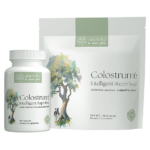
Researchers studying bovine colostrum have become particularly interested in this intestinal barrier. Human studies, including research involving strenuous exercise as a physiological stressor, have examined whether bovine colostrum supplementation may help support intestinal integrity under physical stress. The results have been interesting enough that this remains an active area of scientific investigation.
The rationale is biological. Bovine colostrum naturally contains growth factors, immunoglobulins, and other bioactive compounds that interact with intestinal tissue. Compounds such as EGF and TGF-beta have been studied for their potential role in supporting the ongoing renewal of the intestinal epithelium.
That does not mean colostrum is a magic patch for your intestine. It means we are learning that the condition of the barrier itself deserves far more attention than most people give it.
Nature evolved colostrum for a time when the digestive and immune systems are undergoing extraordinary development. The compounds it contains interact with intestinal tissue at a moment when this biology is critical.
A Better Question to Ask About Your Digestion
Most people evaluate their digestion by asking, “How does it feel?” That is a fair place to start, but it is a fairly narrow measure of what your gut is actually doing.
The bigger question might be this: How well is my gut barrier deciding what gets into me in the first place?
That question opens up a much richer conversation. It brings in nutrition, stress, sleep, physical activity, and the specific nutritional compounds that support barrier function. It moves the focus from symptoms toward the underlying biology.
The plumbing model treats your gut as a passive channel. The gatekeeper model treats it as an active, intelligent system that deserves to be supported. The latter is more consistent with current understanding of intestinal physiology.