
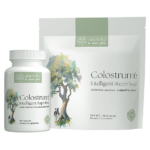




In most areas of nutrition science, the question of quality centers on what a food or supplement contains. In colostrum science, there is a prior question that must be answered before composition can even be meaningfully evaluated: when was it collected?
This distinction, unique to colostrum among major supplement categories, is rooted in biology. Colostrum’s composition is not static. It changes rapidly from the moment of birth. And the rate of that change means that the window between the best possible colostrum and average-quality colostrum is measured not in days but in hours.
What Makes First Milking Colostrum Different
The phrase “first milking” refers specifically to colostrum collected from a cow during the first milking following calving, ideally within the first six hours after birth. This is the window during which the biological profile of colostrum is at its peak: the highest concentrations of immunoglobulins, the richest growth factor content, and the most complete assembly of biologically active proteins that will ever be present in this animal’s mammary secretions.
After the first milking, the mammary gland begins the transition to conventional milk production. The transfer of immune substances from the mother’s bloodstream into the gland, the process that enriches colostrum with IgG and other large molecular compounds, is blocked once milk removal begins. What replaces the collected colostrum is a transitional fluid: similar in some respects to colostrum, but measurably lower in the compounds that define colostrum’s biological value.
Research conducted across large populations of dairy animals has documented this compositional decline in quantitative terms:
- IgG concentrations at first milking: typically 50-100 mg/mL or higher
- IgG concentrations at second milking (12-16 hours post-birth): typically 20-40 mg/mL
- IgG concentrations at 24-48 hours post-birth: approaching transition milk levels
- By 72 hours post-birth: the fluid is no longer considered true colostrum by veterinary or dairy science standards
Growth factor concentrations follow a similar pattern. Lactoferrin levels decline. The coordinated biological profile that defines first-milking colostrum begins to unmoor.
Why This Matters for Supplement Sourcing
The supplement industry’s use of the word “colostrum” is broadly unregulated from a timing perspective. A product can label itself as colostrum without specifying when that material was collected, how it was pooled with other collections, or whether the resulting composition reflects the peak biological profile that the word “colostrum” implies.
This creates a transparency gap that matters to the consumer or practitioner trying to evaluate products meaningfully. IgG standardization, expressing quality as a minimum IgG percentage, is a step toward transparency but an incomplete one. IgG is one marker. First-milking colostrum contains dozens of biologically active compounds beyond IgG, many of which are not individually measured or disclosed on product labels.
The complete quality picture requires knowing:
- Collection timing (first milking within 6 hours is the standard)
- Processing method (low-temperature drying to preserve heat-sensitive proteins)
- Whether the product is whole colostrum or a fractionated/defatted derivative
- Country of origin and dairy farming standards
- Third-party testing for key bioactive markers beyond IgG alone
Is Colostrum Better Than Protein Supplements?
This is a comparison that frequently arises in the sports nutrition context, and it deserves a direct answer. Bovine colostrum is not a protein supplement in the conventional sense. It contains protein, significantly, but its defining biological value lies in compounds that conventional protein supplements (whey, casein, plant proteins) do not contain: immunoglobulins, growth factors, lactoferrin, proline-rich polypeptides.
These are compounds with immune signaling, gut barrier, and cellular communication functions that protein alone does not provide. Comparing colostrum to a protein supplement is a category error, they are different tools, relevant to different biological questions, and can often complement each other.
Sourcing as a Statement of Scientific Commitment
For Anovite, the commitment to first-milking collection is not a marketing position. It is a reflection of what the science actually requires to deliver the biological profile that colostrum research is based on. The studies that found meaningful effects from bovine colostrum supplementation used high-quality, first-milking colostrum. Products sourced to a lower standard represent a different substance, evaluated against a different evidence base.
For a closer look at why the six-hour biological window operates as it does at the mechanistic level, not just as a sourcing standard but as a biological event, the post examining the six-hour window as a biological mechanism provides the underlying explanation. And for the historical context of how agricultural research established this standard, the post on the 2,200-calf study documents one of the most important field studies in colostrum science.