
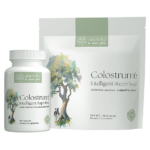



Athletic performance at the highest level is not just a training problem, it is a recovery problem. The defining constraint for most elite athletes is not their capacity to train hard. It is their body’s ability to adapt efficiently between training sessions: to repair tissue, restore immune resilience, and return to baseline quickly enough to train hard again.
This is the biological context in which bovine colostrum first attracted serious attention in sports science, beginning in the 1990s and continuing through a growing body of peer-reviewed research. Understanding why colostrum is relevant to athletic performance requires understanding what high-level training actually does to the human body.
What Intense Training Does to Physiology
High-volume or high-intensity training places simultaneous demands on multiple physiological systems. Muscle fibers experience mechanical stress and require repair. The immune system responds to the physical challenge as a form of stress, and immune cells are mobilized in ways that temporarily reduce the immune resources available for other functions. The gastrointestinal system is often disrupted, reduced blood flow during exercise contributes to a well-documented phenomenon called exercise-induced intestinal permeability, in which the gut barrier becomes temporarily more permeable.
The combination of these effects, muscle damage, immune challenge, and gut stress, means that recovery from serious athletic training is a genuinely complex biological problem. Single-compound solutions tend to address only part of it.
What the Research on Colostrum for Athletes Shows
Several well-designed human studies have examined bovine colostrum supplementation in athletic populations. The findings across these studies, while variable in magnitude, have established a consistent set of observations:
- Research examining colostrum supplementation over 8-week training periods has observed improvements in performance on repeated exercise bouts, some studies reporting improvements in the range of 5% or more during a second exercise session following supplementation, compared to a placebo group
- Studies have found that colostrum supplementation may help support immune function markers during periods of intensified training, a context in which overreaching athletes frequently experience immune suppression
- Research into gut barrier integrity during exercise has found preliminary evidence that colostrum supplementation may help support intestinal barrier function under the stress of high-intensity exercise
- Several studies have examined changes in body composition and lean mass over training periods with colostrum supplementation, with some reporting modest favorable changes in lean mass
It is important to note that these findings represent a body of research with some consistent signals, not a definitive clinical consensus. Study designs, populations, dosing protocols, and outcome measures vary across the literature. An honest summary is that bovine colostrum has demonstrated meaningful signals across multiple dimensions of athletic performance and recovery, signals that continue to attract research investment.
Why Colostrum Is Biologically Suited to Athletic Recovery
The biological rationale for colostrum in athletic contexts is more coherent than for many sports nutrition compounds. Colostrum’s growth factors interact with the muscle and intestinal tissues that training stresses. Its immunoglobulins are relevant to the immune suppression that intensified training induces. Its gut barrier-supporting compounds address the exercise-induced intestinal permeability that endurance athletes in particular experience.
This multi-system relevance is unusual. Most sports nutrition compounds address a single physiological mechanism, protein synthesis, oxygen delivery, creatine resynthesis. Colostrum’s biological complexity makes it relevant across several mechanisms simultaneously, which is consistent with the observation that research has found signals across multiple performance dimensions rather than a single outcome.
Is Colostrum on the WADA Prohibited List?
No. Bovine colostrum is not on the World Anti-Doping Agency (WADA) prohibited substances list, and athletes competing in tested sports can use it freely. This is relevant because the presence of IGF-1 in colostrum sometimes raises questions about prohibited status, but natural food-derived IGF-1, present at dietary concentrations, is not the same as the exogenous administration of synthetic IGF-1 that anti-doping rules address.
Colostrum’s Role in Modern Sports Nutrition
Sports science has increasingly recognized that optimal performance is as much about recovery efficiency as training capacity. The ability to train more frequently, with better adaptation between sessions, often differentiates elite from near-elite performance over a training season.
Bovine colostrum, with its combination of immune factors, growth factors, and gut barrier-supporting compounds, represents one of the more biologically coherent natural approaches to supporting that recovery process. The research is not complete, but it is consistent enough to explain why coaches and athletes who track the science have maintained interest in colostrum for well over two decades.
For a deeper look at the specific growth factors within colostrum and how they function as cellular signaling molecules, the post on growth factors and the science of cellular repair provides the underlying biology. And for those interested in how gut barrier integrity during exercise specifically intersects with recovery, the post on the gut barrier as the body’s first line of defense offers important context.