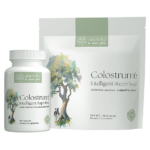



As interest in colostrum has grown, the supplement market has expanded to accommodate that interest, and not always in ways that serve the consumer well. There are now dozens of products carrying the word “colostrum” on their labels. The biological reality these products contain varies enormously.
Understanding what separates a genuinely high-quality colostrum product from a commodity starts with understanding which variables actually determine biological value. There are three that matter most.
Variable 1: When the Colostrum Was Collected
Timing of collection is the single most consequential quality variable in bovine colostrum.
Colostrum is only “colostrum” in the full biological sense for a narrow window following birth. Within the first six hours after delivery, the mammary gland contains the highest concentration of immunoglobulins, growth factors, lactoferrin, and proline-rich polypeptides that it will ever produce. After this window, the mammary cells shift toward conventional milk production, and the concentration of bioactive compounds begins declining measurably.
By 12–16 hours post-birth, colostrum collected at second milking contains substantially reduced concentrations of the most biologically active compounds. By 48–72 hours, researchers have observed that concentrations of key immune and growth factors are approaching those found in conventional transition milk.
The practical implication: a product sourced from colostrum collected at 24, 36, or 48 hours post-birth is not the same product as one sourced from first-milking colostrum collected within six hours. The label may say the same thing. The biology does not.
Does the product you are considering specify when the colostrum was collected? “First milking” or “collected within 6 hours of birth” should be the standard, not a premium exception.
Variable 2: How the Colostrum Was Processed
The bioactive proteins that give colostrum its biological value are, as a class, sensitive to excessive heat. Immunoglobulins, growth factors, and lactoferrin can all be partially or significantly degraded by the high-temperature processing methods used to extend shelf life and reduce microbial counts.
Standard high-heat pasteurization, temperatures above 72°C and certainly above 80°C, can degrade a meaningful percentage of the heat-sensitive proteins in colostrum. Some manufacturers use lower-temperature methods (gentle spray-drying, freeze-drying, or low-temperature pasteurization) specifically to preserve the biological integrity of these compounds.
The question to ask: at what temperature was this product processed, and was it designed to preserve bioactive protein integrity? Vague answers to this question are not reassuring.
Variable 3: Whether the Colostrum Has Been Defatted or Otherwise Manipulated
Whole bovine colostrum contains fat. Some processing operations remove the fat fraction to extend shelf life, improve mixability, or standardize the product to a specific IgG percentage. This manipulation has biological consequences.
Colostrum’s fat fraction contains fat-soluble bioactive compounds, including some growth factors and immune-supporting lipids. Removing it to hit a cleaner IgG percentage produces a different, and in many ways reduced, product. IgG concentration is a useful quality marker, but it is an incomplete one. Standardizing to a single marker while removing biological complexity is a trade-off worth understanding.
Genuine whole colostrum, processed to preserve the full spectrum of its native compounds, is a more complete product than a defatted concentrate standardized to one number.
What to Look for When Choosing a Colostrum Supplement
When evaluating any colostrum product, these are the questions worth asking:
- Is the collection timing specified? First milking or within 6 hours is the standard to look for.
- What processing temperature was used? Low-temperature methods that preserve heat-sensitive proteins are preferable.
- Is the product whole colostrum or defatted/fractionated? Whole colostrum preserves the full biological matrix.
- Is the sourcing transparent? Knowing the dairy source, country of origin, and compliance with safety standards matters.
- Are third-party testing results available? IgG percentage should be documented, but it should not be the only marker discussed.
A product that cannot answer these questions specifically has answered the question of how it was made indirectly.
The Broader Point
The growth of the colostrum supplement category is, in many ways, a good thing. It reflects expanding scientific awareness of bovine colostrum’s biological complexity and potential relevance for human nutrition. But category growth also brings category dilution, products that appropriate the science without meeting the standards that science depends on.
The science of bovine colostrum is not a marketing story. It is a body of research developed over decades in agricultural, veterinary, and nutritional biology settings. The most meaningful contribution any supplement brand can make to that science is to source and produce its products to the standard the science actually requires.
For a closer look at the biology behind the six-hour collection window and why it matters mechanistically, not just as a marketing claim, the examination of the timing of colostrum’s transition addresses that question directly. And for consumers comparing products, the discussion of what early colostrum contains and why timing defines its quality offers useful context.