




Based on the research and teachings of Dr. Anthony Kleinsmith
Boost your immune system. It is one of the most common phrases in the wellness industry. Scientifically, that framing is not particularly accurate.
Your immune system is not a light switch. And more immune activity is not automatically better. In fact, in many contexts, more immune activity is exactly what you do not want.
What we actually want is an immune system capable of doing something much more sophisticated: responding appropriately. That is a very different goal, and understanding it changes how you think about immune health.
The Problem with “Boosting”
The word boost implies that immune function is a dial that can be turned up. Turn it higher, get more immunity, become more resistant to illness. Simple.
The reality is that an overactive immune system causes serious problems. Allergies are the immune system overresponding to substances it should tolerate. Autoimmune conditions occur when the immune system misidentifies the body’s own tissues as threats. Chronic inflammation, which is now understood to underlie many long-term health conditions, is often the result of immune activity that does not resolve when it should.
You do not want a bigger immune response. You want a smarter one.
What the Immune System Actually Does
Your immune system must constantly determine when to respond, what to respond to, how strongly to respond, and when to stop responding. That is regulation. It is not brute force. It is a highly coordinated system of recognition, decision-making, appropriate action, and controlled resolution.
Think of your immune system less like an army that needs to become bigger and more like a highly trained security team. You do not want security tackling everyone who walks through the door. You want it recognizing what belongs there, identifying what does not, and responding appropriately to genuine threats while remaining calm about routine traffic.
That requires communication. Immune cells constantly exchange signals with each other, with tissues throughout the body, and with the environment. When the communication is working well, responses are proportionate. When it is not, responses can become either sluggish or excessive.
The Gut Is Where a Lot of This Happens
The gastrointestinal tract plays an especially interesting role in immune regulation because it constantly encounters food components, microorganisms, and compounds from the outside environment. Immune tissues in and around the intestine have to make decisions about those encounters all day long.
Should this food protein be tolerated? Yes, absolutely. Should this commensal bacterium be tolerated? Yes, it lives here. Should this potential pathogen be responded to? Yes, and with appropriate force. Should this response continue after the threat has passed? No, resolve and calm down.
A substantial portion of the body’s immune activity is concentrated in the gut and gut-associated lymphoid tissue. That is not incidental. It is where the body most frequently encounters the outside world, and it is where the immune system does much of its work learning what to react to and what to leave alone.
This is one of the reasons gut health has become such a central topic in immunology. The immune conversation happens largely in the intestinal environment, and disruption of gut function often shows up as changes in immune signaling that extend far beyond the digestive tract.
Where Colostrum Enters the Picture
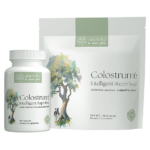
Colostrum is fascinating in this context because it naturally contains numerous compounds involved in biological communication, including immunoglobulins (IgG, IgA, IgM), lactoferrin, and proline-rich polypeptides.
Immunoglobulins are the antibodies your immune system uses to recognize specific substances. Lactoferrin is a multifunctional protein involved in iron regulation, antimicrobial activity, and immune modulation. Proline-rich polypeptides are small regulatory peptides that researchers have studied for their apparent role in immune signaling.
Notice the word “regulation” appearing consistently. Colostrum is not typically described as an immune stimulant. It is described as immunomodulatory, meaning it appears to participate in the regulatory conversation rather than simply amplifying one side of it.
That framing matters. Colostrum is not another bottle promising to boost immunity. Its biological interest lies in the fact that it evolved to help calibrate the immune system of newborn mammals, giving the naive immune system information it needs to learn what to respond to and how strongly.
Why This Reframe Matters for How We Talk About Products
If you understand the immune system as a regulation problem rather than an amplification problem, marketing language shifts. Products that promise to boost, supercharge, or maximize immunity are working from a model of the immune system that does not match the biology.
Products that support balance, help maintain regulatory function, or support the environment in which the immune system operates are working from a more accurate model. The language is less exciting. But it aligns better with what the immune system actually needs.
The language of immune support has cycled through decades of trends. The words change. The underlying biology does not.
The real story of immune health is balance, communication, and appropriate response. Accurate language sometimes reads less dramatically than marketing language, but it more closely matches what the biology supports.
What Actually Supports Immune Health
If the goal is a well-regulated immune system rather than an amplified one, the inputs that matter tend to be less exotic than most supplement marketing suggests.
Sleep supports immune regulation more than most single supplements do. Chronic sleep deprivation measurably affects immune function. Regular physical activity, at moderate intensity, supports immune resilience, while extremely intense sustained training can temporarily suppress it. Adequate nutrition, including protein and micronutrients that participate in immune cell function, matters. Stress management affects immune signaling in ways that are increasingly well-documented. Gut health, given how much of the immune system lives there, is genuinely important.
Within that larger picture, targeted nutritional support has a legitimate role. Compounds with immunomodulatory rather than immunostimulatory properties, including some found in bovine colostrum, are worth considering as part of a broader approach to supporting immune balance.
The question is not how to boost my immunity. The better question is: how do I support a well-regulated immune system that responds appropriately to the challenges it faces and returns to baseline when it is done.
That question leads to better answers.